- Home
- Diamond Grinding Wheel for Tungsten Carbide Tools
Catalogue
Catalogue
Diamond Grinding Wheel for Tungsten Carbide Tools
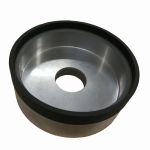
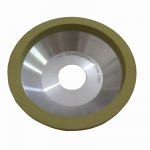
The diamond grinding wheel for carbide has high precision, fast grinding, and good wear resistance. It is according to the characteristics of carbide and selection of a suitable bonding agent. It is made by selecting the right bond and diamond abrasive according to the characteristics of the carbide.

Tungsten carbide:
Tungsten carbide is an alloy material made from a kind of hard compound of refractory metal and a binding metal by the powder metallurgy technology.
Tungsten carbide is widely used as tool material such as turning tool, milling cutter, planer, drill, boring tool, etc. for cutting cast iron, non-ferrous metal, plastic, chemical fiber, graphite, glass, stone and ordinary steel, and can also be used for cutting hard-to-machine materials such as heat-resistant steel, stainless steel, high manganese steel, and tool steel.
The main components of cemented carbide are carbonization and titanium carbide,
Tungsten carbide features high hardness, good wear resistance, high strength and toughness, good heat resistance and corrosion resistance, especially its high hardness and wears resistance, which remains unchanged even at the temperature of 500 ° C, and it still has a high hardness at 1000 °C.

Now diamond grinding wheels have advantages in grinding cemented carbide tools owing to its features.
There are resin bond and vitrified bond diamond grinding wheel for tungsten carbide
Resin Diamond Grinding Wheel for Carbide
Resin bond diamond grinding wheel can achieve an ideal grinding effect, but its grinding efficiency is low. For resin diamond grinding wheel, usually use 100-120# for rough grinding, but for vitrified diamond grinding wheel, usually use 120#-150# for rough grinding. From the above rough grinding, the vitrified diamond grinding wheel has a higher removal rate and better surface finish than that of resin grinding wheel.

Vitrified bonding agent bonded diamond more firmly than resin bond, and there are larger pores between abrasives and bond. For the same grinding allowance, the grinding efficiency of the vitrified diamond grinding wheel is twice as high as resin diamond grinding wheel, and the service life is 2-3 times as long as resin diamond grinding wheel.
Resin bond diamond grinding wheels are still widely used for grinding tungsten carbide because of the low cost and simple manufacturing process. When grinding large-sized grinding wheels, only choose resin bond grinding wheels. Vitrified bond grinding wheel cannot be made from large-sized one because of complicated manufacturing technology.
Vitrified Diamond Grinding Wheel for Carbide
Vitrified bond diamond grinding wheel has high strength and heat resistance better than that of resin bond wheel, cutting sharp, grinding efficiency is far higher than that of resin wheel. At the same time, it is not heated and blocks easily and the thermal expansion is small, and the shape of the workpiece remains good and can obtain good processing precision. The grinding wheel is not deformed easily during the grinding process, and the comprehensive cost is lower than that of resin bond diamond grinding wheel.

At present, cemented carbide tools are widely used, and the type of tungsten and titanium carbide is increasing, and their quality is constantly improving. This requires the better improvement of the surface finish quality of the tungsten carbide.
With good self-sharpness, low cost and making large-sized grinding wheels, resin bond diamond grinding wheel is still widely used in the field of tungsten carbide processing industry. But the vitrified bond diamond grinding wheels will play a leading role in the machining cemented carbide tools.
For More Information on The Grinding Wheel
Related Reading:2025 How to Sharpen Carbide Saw Blade ? 6 Key Points
Please Download: Diamond and CBN Grinding Wheels Catalog.PDF
Selection Guide OF Diamond Grinding Wheels for Carbide Tools
Selection Table Of Diamond Grinding Wheel for Carbide Drills Bit
Drills (Finishing / Chamfering / Polishing):
Only small areas of the cutting edge are involved, with micro surface finishing → the wheel shape must be compact, precise, and avoid damaging already finished surfaces.
| Step No. | Process Stage | Detailed Operation | Wheel Type (Shape) | Recommended Bond | Common Grit (#/D) | Compatible Machines | Key Purpose | Precautions |
|---|---|---|---|---|---|---|---|---|
| 1 | Rod Preparation | Rough OD grinding and sizing of carbide rod | 1A1 (Straight) | Vitrified (V) | 325# (D46) | Studer, Junker | Correct sintering deformation, ensure uniform diameter, leave 0.1–0.2mm allowance | Wet grinding, sufficient coolant to avoid deformation |
| 2 | Rod Fine Grinding | Precision OD grinding and surface finishing | 1A1 (Straight) | Vitrified (V) | 600# (D25) | Studer, Reinecker | Ensure roundness, straightness, Ra ≤ 0.8μm | Limit removal ≤ 0.02mm per pass, avoid burning |
| 3 | Flute Roughing | Rough helical flute grinding (material removal) | 1A1 (Straight) | Vitrified (V) | 325#–400# (D46–D35) | Rollomatic, ANCA, Walter | Form initial flute geometry, leave stock for finishing (0.05–0.1mm) | Prevent clogging, vitrified bond preferred |
| 4 | Flute Finishing | Precision flute wall grinding | 1A1 (Straight) | Vitrified / Resin / Metal-Resin | 600#–800# (D25–D20) | Rollomatic, ANCA | Improve flute accuracy and surface finish (Ra ≤ 0.4μm) | Clean debris after grinding |
| 5 | Margin Rough Grinding | Forming drill margin width | 1A1 (Straight) | Resin (R) | 600# (D25) | ANCA, EWAG | Define margin width (0.1–0.3mm), ensure straightness | Avoid edge chipping |
| 6 | Relief Rough Grinding | Primary and secondary relief rough shaping | 11V9 (Cup) | Resin (R) | 600#–800# (D25–D20) | EWAG, ANCA | Establish relief angle (8°–12°), form cutting edge | Maintain angle consistency |
| 7 | Relief Finishing | Precision relief grinding | 11V9 (Cup) | Resin / Metal-Resin | 1000#–1200# (D15–D12) | EWAG, Walter | Improve edge sharpness and uniformity | Remove ≤ 0.01mm per pass |
| 8 | Chisel Edge Grinding | Chisel edge angle adjustment and shortening | 11V9 / 12V2 | Resin (R) | 1000#–1500# (D15–D10) | ANCA, EWAG | Reduce cutting resistance, improve centering | Maintain 118° ±2° accuracy |
| 9 | Margin Finishing | Final margin polishing and alignment | 1A1 (Straight) | Resin / Metal-Resin | 1200#–1500# (D12–D10) | Studer, ANCA | Improve guiding accuracy and wear resistance | No chipping or scratches allowed |
| 10 | Final Finishing / Honing | Edge micro-chamfering and inspection | 11V9 (Cup) | Resin (R) | 1500#–2000# (D10–D7) | EWAG, ANCA | Improve edge toughness, prevent chipping | Controlled honing: 0.005–0.01mm |
Selection Of Diamond Grinding Wheel for Carbide End Mills
Require grinding of helical flutes, relief angles, end faces, and cutting edges → the wheel shape must be able to enter flutes, ensure root clearance, and avoid interference.
Outer Diameter Finishing
- High-rigidity straight wheels are mainly used
- Common types: 1A1, 4A1
- Features: Large contact area, stable grinding, ensuring cylindricity and dimensional consistency
- Not recommended to use small contact area wheels, as they may cause chatter marks or roundness errors
Straight Flute Grinding
- Disc wheels with stable side surfaces are used
- Common types: 14A1, 4A2
- Features: Good side rigidity, ensuring straightness of flute walls and consistency of margins
Taper Edge / Lead Taper Grinding
- Angular-type cup wheels are used
- Common types: 11V9, 12V2
- Features: Precise angle control, suitable for tapered surface forming
Selection Of Diamond Grinding Whee for Carbide Inserts
| Step No. | Process Stage | Detailed Operation | Wheel Type (Shape) | Recommended Bond | Common Grit (#/D) | Compatible Machines | Key Purpose | Precautions |
|---|---|---|---|---|---|---|---|---|
| 1 | Post-Sintering Pre-treatment | Remove oxide layer and burrs, shape the blank, establish reference surface | 1A1 (Straight) | Vitrified (V) | 325#–400# (D46–D35) | Agathon / Walter / Vollmer | Correct sintering deformation, establish datum, leave 0.1–0.15mm allowance | Must use wet grinding, sufficient coolant (≥3 L/min) |
| 2 | Insert Surface Finishing | Precision grinding of top and bottom surfaces | 14A1 (Reinforced Straight) | Resin (R) | 600#–800# (D25–D20) | Agathon / Studer | Flatness ≤ 0.01mm, Ra ≤ 0.4μm | Balanced double-side grinding, feed ≤ 0.02mm/pass |
| 3 | Edge Rough Grinding | Initial forming of cutting edges | 12A2 / 11V9 | Resin (R) | 400#–600# (D35–D25) | ANCA / Agathon | Form rake and relief angles | Avoid edge chipping |
| 4 | Edge Finishing | Precision edge refinement | 12A2 / 11V9 | Resin / MR | 800#–1200# (D20–D12) | EWAG / ANCA | Improve sharpness and wear resistance | Clean debris thoroughly |
| 5 | Chamfering / Honing | Edge chamfering and radius control | 11V9 / 14F1 | Resin (R) | 1000#–1500# (D15–D10) | Vollmer / ANCA | Improve edge strength | Chamfer 0.005–0.02mm |
| 6 | Chipbreaker Finishing | Refine chipbreaker geometry | 1A1 / Profile | MR | 800#–1000# (D20–D15) | Walter / ANCA | Smooth chip evacuation | Tolerance ±0.02mm |
| 7 | Final Inspection | Micro-honing and inspection | 11V9 | Resin (R) | 1200#–1500# (D12–D10) | EWAG / Vollmer | Improve stability | Honing 0.005–0.01mm |
Diamond Grinding Wheel Selection for Carbide Reamers
Helical Flute Grinding (Core Forming Process)
- The grinding wheel must have angular entry capability and side profiling ability, allowing it to enter the helical flute for form grinding
- Common types: 11V9, 12A2, 14V9
- Features: Wheels with angled or tapered structures enable interference-free grinding inside the flute and avoid contact with opposite cutting edges
Peripheral Relief / Side Cutting Edge Grinding
- Disc-type or single-side working surface wheels are required, with good side rigidity and stable contact area
- Common types: 14A1, 4A2
- Features: Stable side contact, suitable for relief grinding, while avoiding interference with already formed cutting edges
End Cutting Edge / Bottom Edge Grinding (End Cutting)
- Small-diameter cup wheels or small disc wheels are used for high-precision localized grinding
- Common types: 6A2, 11V9
- Features: Small contact area, ideal for precision grinding of end edges, bottom edges, and small-angle form features
Reamer grinding mainly uses straight and disc-type wheels, emphasizing large contact area and system rigidity. Complex or special-shaped wheels are rarely used.
Common Models Of Diamond Wheel for Grinding Carbide Saw Blades
| Step No. | Process Stage | Detailed Operation | Wheel Type (Shape) | Recommended Bond | Common Grit (#/D) | Compatible Machines | Key Purpose | Precautions |
|---|---|---|---|---|---|---|---|---|
| 1 | Saw Blade Substrate Pre-treatment | Rough grinding of alloy steel body (surface/OD), thickness and diameter sizing | 14A1 | Vitrified (V) | 325# (D46) | Vollmer / Studer | Correct deformation | Wet grinding required |
| 2 | Saw Blade Substrate Finishing | Precision grinding of surface and OD | 14A1 | Vitrified (V) | 600# (D25) | Vollmer / Reinecker | Flatness control | Low feed per pass |
| 3 | Carbide Tip Pre-treatment | Tip surface grinding | 1A1 | Resin (R) | 600# (D25) | ANCA / EWAG | Improve brazing strength | Avoid chipping |
| 4 | Post-Brazing Dressing | Clean weld seam | 1A1 + 11V9 | Resin (R) | 600#–800# | Vollmer / Walter | Stable joint quality | Clean thoroughly |
| 5 | Side Face Rough Grinding | Side flatness correction | 14A1 | Resin (R) | 400# (D35) | Vollmer / ABM | Side clearance setup | Symmetry required |
| 6 | Tooth Profile Rough Grinding | Form rake/relief angles | 12A2 / 12V2 | Resin (R) | 400#–600# | Vollmer / WRIGHT | Tooth geometry forming | Control pitch accuracy |
| 7 | Tooth Profile Finishing | Precision finishing | 12A2 / 11V9 | Resin / MR | 800#–1000# | Vollmer / ANCA | Sharpness improvement | Batch consistency |
| 8 | Tooth Top Finishing | Tooth top grinding | 14F1 | Resin (R) | 600#–800# | Vollmer / ABM | Wear resistance | Uniform chamfer |
| 9 | Side Face Finishing | Surface refinement | 14A1 | Resin / MR | 800#–1200# | Studer / Vollmer | Surface quality | Avoid scratches |
| 10 | Edge Honing / Final Inspection | Micro-honing and inspection | 11V9 | Resin (R) | 1200#–1500# | EWAG / Vollmer | Edge stability | Minimal removal |
Common Standard Models of Vitrified Bond Diamond Grinding Wheels
Selection Guide OF Diamond Grinding Wheels for Carbide Tools
For carbide grinding, resin bond diamond wheel and vitrified diamond wheels are the most commonly used solutions. Can’t find your model or need a different bond type (metal, ceramic, electroplated, or hybrid)? Contact us by email — we will reply within 24 hours with a tailored solution.
If you would like to learn more about applications and case studies of hybrid bond grinding wheels, please refer to the article below:
Related Reading 2:2025 Test a Diamond 1A1 Fluting Wheel For Wooden Keyhole Cutter
Related Reading 3:Choose Hybrid Grinding Wheel For Cutting Tools|Diamond & CBN
Related Reading 4:CNC Tools Grinding |solve Carbide tools Collapsed Edge
At New Diamond Tools, we focus on quality customer service.
- Xinxiang New Zuan Diamond Tools Co., Ltd.
- 18# Building, Jingu Oriental Piazza, No.1 Jinsui Road, Xinxiang, Henan 453000, China
- +86-373-7199720
- +86-15803991654
- info@superabrasivetools.com